Protecting Content on the Web
The web is a great way to share your best work, but preventing unauthorized disclosure is essential to maintain your competitive advantage, preserve trade secrets, and prevent others from exploiting your innovations without permission. This is an example page with a variety of multi-modal content to show how Echomark protects such data from unauthorized disclosure.
Forensic watermarking is a digital security technique used to embed unique, imperceptible markers into multimedia content, such as images, audio, or video. These markers serve as a form of digital fingerprint, allowing content owners to track and identify unauthorized use or distribution of their media. Unlike traditional watermarking, which aims to visibly mark content, forensic watermarking is designed to be invisible to the human eye or ear, yet it remains detectable under analysis. The primary purpose of forensic watermarking is to deter piracy and track the origin of leaks in cases of unauthorized sharing or reproduction. By embedding distinctive identifiers specific to each user or distribution channel, forensic watermarking allows content creators and distributors to trace the source of copyright violations or breaches, offering a powerful tool for digital rights management (DRM).
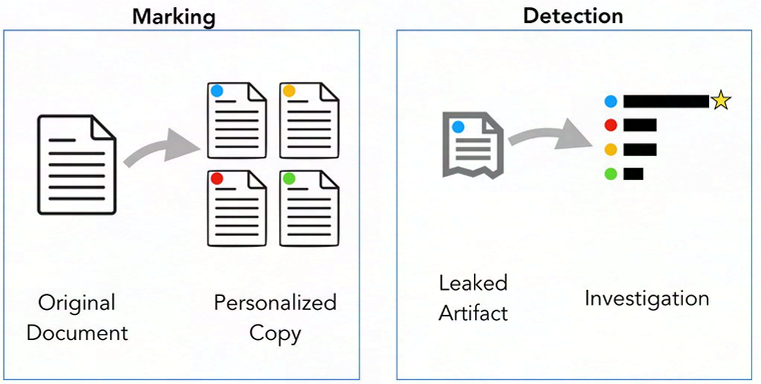
Multimedia Forensic Watermarks
EchoMark protects online injects invisible forensic watermarks in online content before it is delivered to your users. Simple rules can be used to mark text content, image content, and even documents served from your website! The image below is watermarked.

Preserving Formatting and Professionalism
Every bit of content can have invisible cookie crumbs to protect against unauthorized disclosure. Our algorithms closely preserve the formatting of the original content.
“A concise and compelling message belongs here. Soon, this space will hold the words that define your brand.”